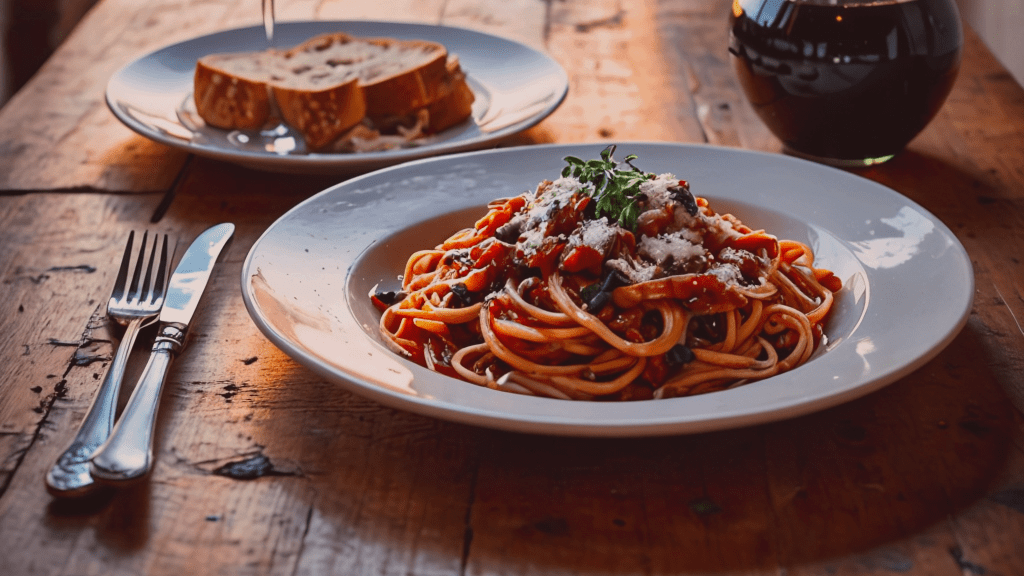
Ingredients
- 320g bucatini
- 150g guanciale, cut into thin strips
- 400g peeled San Marzano tomatoes, crushed by hand
- 80g Pecorino Romano, finely grated, plus extra for serving
- 1 small dried red chilli (or ½ teaspoon chilli flakes), optional
- Salt, to taste
Instructions
- Bring a large pot of lightly salted water to a boil. Since both the guanciale and Pecorino Romano are quite salty, season the water more sparingly than usual.
- Meanwhile, place the guanciale in a large cold frying pan. Set over medium heat and cook slowly for 8–10 minutes, stirring occasionally, until the fat has rendered and the guanciale is golden and crisp around the edges. If using, add the dried chilli during the final minute of cooking to infuse the rendered fat.
- Using a slotted spoon, transfer about one-third of the guanciale to a plate and reserve it for serving.
- Carefully pour the crushed tomatoes into the pan with the rendered guanciale fat. Stir well and simmer gently for 10–15 minutes, until the sauce has slightly thickened and the flavours have melded.
- Cook the bucatini until al dente according to the package instructions. Before draining, reserve about 250ml of the pasta cooking water.
- Transfer the drained bucatini directly to the pan with the tomato sauce. Toss over medium heat for 1–2 minutes, adding a splash of the reserved pasta water if needed to create a glossy sauce that coats the pasta evenly.
- Remove the pan from the heat and stir in half of the grated Pecorino Romano until lightly incorporated. (Traditionally, much of the cheese is added at the table, but incorporating a small amount into the sauce gives it extra body.)
- Divide the pasta among warm plates. Top with the reserved crispy guanciale, a generous grating of Pecorino Romano, and an extra pinch of freshly ground black pepper if desired. Serve immediately.
Chef’s Tip: Authentic Bucatini all’Amatriciana contains only a handful of ingredients: guanciale, tomatoes, Pecorino Romano, pasta, and (optionally) a little chilli. There is no onion, garlic, olive oil, or wine in the traditional Roman recipe. The rendered guanciale fat provides all the richness the sauce needs, while the starchy pasta water helps bind everything into a silky coating for the bucatini.

