
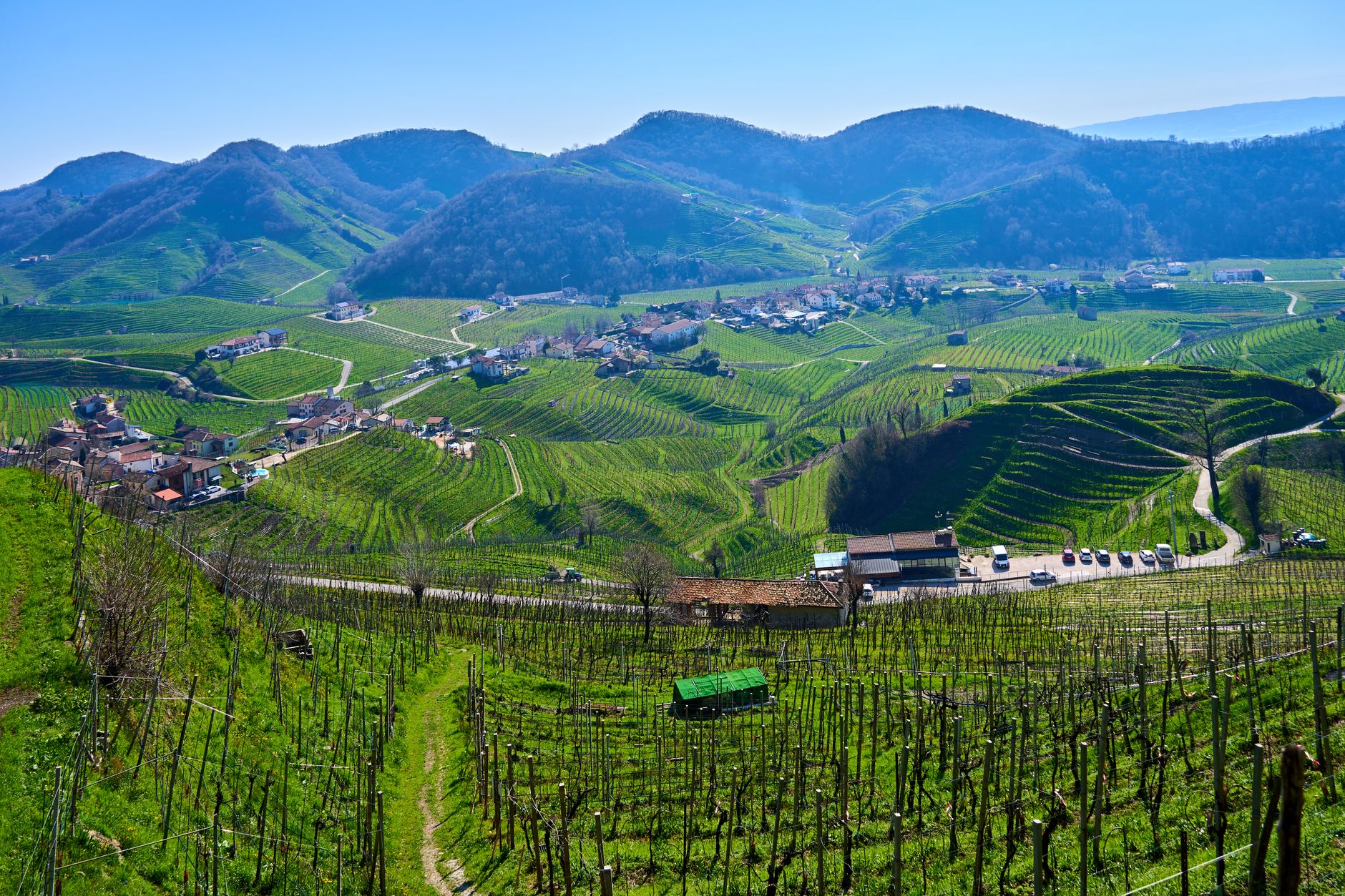
In Valdobbiadene, the hills appear less cultivated than inscribed. Vineyards climb gradients so severe that workers in certain parcels still rely on ropes, monorails, and instinct. The slopes ripple in successive green folds toward the Piave plain, interrupted by bell towers, cypress, abandoned stone casére, and the occasional industrial shed where millions of bottles begin their journey toward airport lounges, wedding receptions, and supermarket shelves across the world.
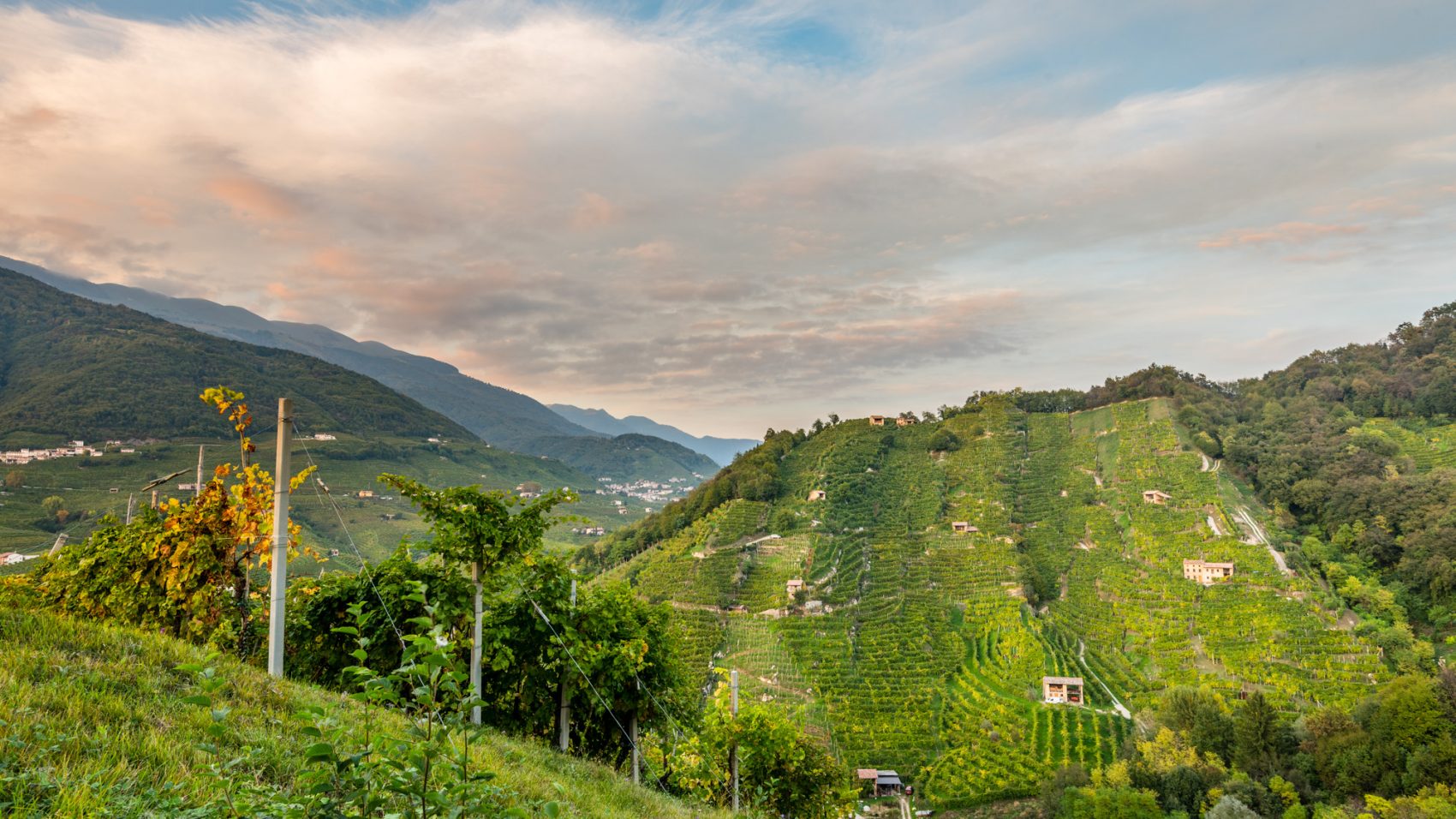
From these hills comes one of the most recognizable wine names on earth: Prosecco. Yet to stand here is to understand immediately that “Prosecco” is no singular thing. The word now encompasses heroic hillside viticulture, multinational export machinery, family memory, speculative land economics, and one of the most consequential agricultural branding exercises in modern Europe. It is at once local and deterritorialized. In Venice it lubricates the ritual of the aperitivo. In London and New York it became shorthand for accessible celebration. In the Veneto itself, some growers speak the name with pride, others with exhaustion.
Italian sparkling wine contains this contradiction everywhere. Unlike Champagne, whose identity consolidated around a singular region, a relatively coherent aristocratic mythology, and a tightly controlled luxury narrative, Italy’s sparkling tradition is fragmented, regional, polyphonic, and deeply political. It stretches from the foggy plains of Emilia-Romagna to Alpine terraces beneath the Dolomites, from sweet Moscato in Piedmont to saline rosé Metodo Classico wines on volcanic soils in Sicily. Its styles range from rigorously traditional bottle-fermented cuvées aged for a decade on lees to frothing, immediate wines intended for consumption within months of harvest. Some are among Europe’s great gastronomic wines. Others are industrial beverages of extraordinary logistical efficiency.
To write seriously about Italian sparkling wine is therefore to write about Italy itself: about regionalism, industrialization, Catholic feast culture, peasant agriculture, post-war prosperity, migration, mechanization, luxury branding, terroir anxiety, and the uneasy coexistence between artisanal identity and export capitalism.
This story begins long before Prosecco.
Before the Bubble: Italy’s Early Sparkling Traditions
The history of Italian sparkling wine is often retroactively narrated through French influence, as though effervescence arrived fully formed from Champagne. The reality is considerably messier and more interesting. Italians had long known lightly sparkling or naturally refermenting wines, or vini mossi, centuries before the codification of méthode champenoise. In rural areas of Emilia, Lombardy, and Piedmont, partially fermented wines were common, particularly in cold-cellar environments where fermentation paused during winter and resumed in spring warmth. Such wines were unstable, cloudy, and frequently consumed locally, but they established a cultural familiarity with effervescence.
Monasteries played a significant role. Benedictine and Cistercian networks across northern Italy transmitted viticultural techniques through Alpine corridors connecting Burgundy, Savoy, Lombardy, and the Germanic world. Wine historians often emphasize the one-way influence of Champagne upon Italy, yet the medieval exchange of agricultural knowledge across the Alps was multidirectional. Monastic communities cultivated grapes not merely for liturgical use but as agricultural systems integrated into broader economic and intellectual life.
By the seventeenth and eighteenth centuries, aristocratic courts in Turin, Milan, Venice, and the Habsburg territories had developed a taste for sparkling wines imported from France. Piedmont, closely linked to Savoy and France through dynastic and military ties, became particularly receptive. The House of Savoy, an ambitious, Francophile, and politically outward-looking dynasty, fostered a court culture in which sparkling wines became symbols of refinement and cosmopolitanism.
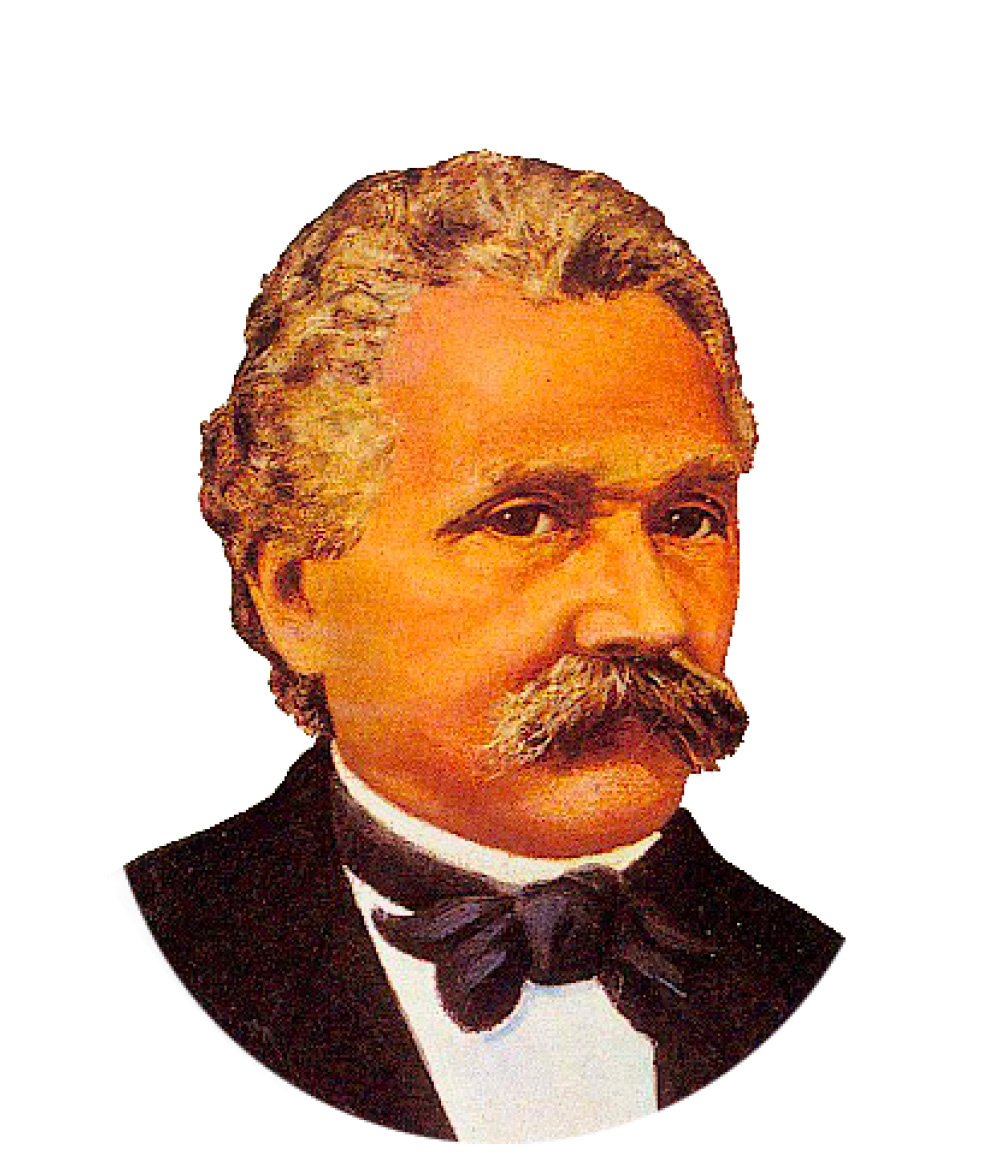
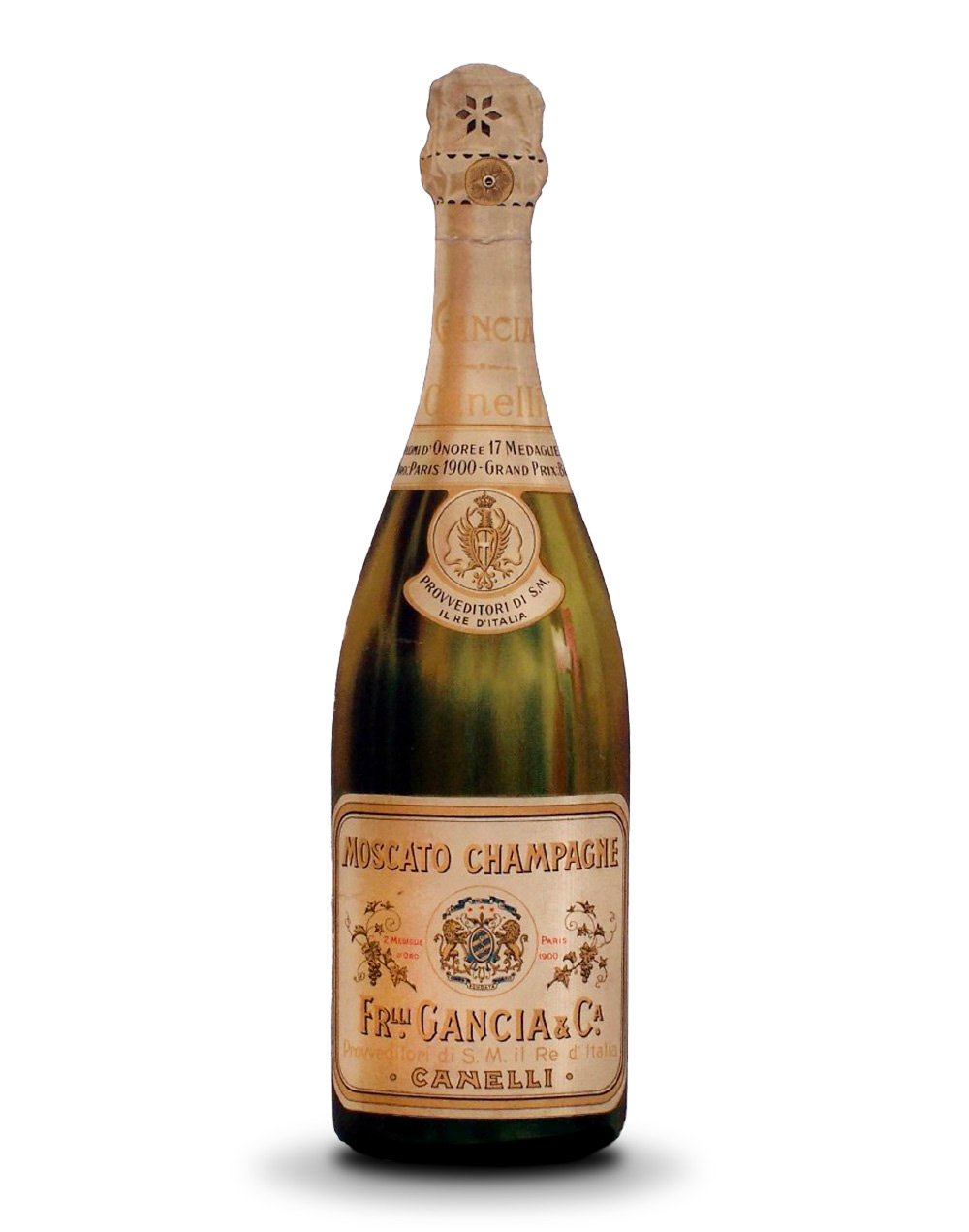
The earliest deliberate attempts to produce Champagne-style wines in Italy emerged in the nineteenth century, particularly in Piedmont and Lombardy. Carlo Gancia, after apprenticing in Reims in the 1840s, returned to Canelli determined to apply traditional Champagne methods to Moscato Bianco. His experiments culminated in the production of sparkling Moscato wines that combined Piedmontese aromatic intensity with French secondary fermentation techniques. Gancia remains one of the foundational figures in Italian sparkling wine history not merely because he imitated Champagne, but because he adapted it to indigenous Italian taste and grape material.
Italy’s political unification in 1861 accelerated this process. Railways connected northern industrial centers. Urban bourgeois classes expanded. Domestic markets widened. Sparkling wine became associated with the aspirations of a newly consolidated nation eager to project sophistication while maintaining regional specificity.
Yet the Italian trajectory diverged fundamentally from Champagne’s.
France developed an elite luxury model centered on scarcity, aging, and prestige branding. Italy, fragmented by geography and social structure, evolved multiple sparkling identities simultaneously: aristocratic Metodo Classico wines in the north, sweet festive wines in Piedmont, rustic frizzante traditions in Emilia, and eventually industrial tank-fermented wines designed for freshness and volume.
Federico Martinotti and the Invention of Modern Italian Sparkling Wine
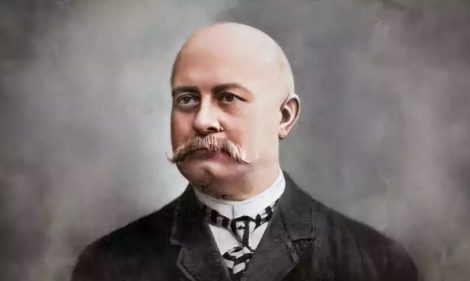
No figure shaped modern Italian sparkling wine more profoundly than Federico Martinotti, though outside professional wine circles his name remains strangely obscure.
Born in 1860 in Villanova Monferrato, Martinotti was an oenologist and director of the Royal Enological Station in Asti. In 1895 he patented a method for conducting secondary fermentation in pressurized tanks rather than individual bottles. The French engineer Eugène Charmat later refined and industrialized the process, and internationally the system became known as the Charmat method. In Italy, however, many producers increasingly prefer the historically accurate term Metodo Martinotti.
Traditional bottle fermentation is labor-intensive. Secondary fermentation occurs inside each bottle; wines must often age for years on lees; bottles are riddled, disgorged, and dosed individually. The process demands storage space, manual labor, and capital patience. Martinotti’s tank method allowed producers to preserve freshness, fruit purity, and aromatic intensity while dramatically reducing production time and cost.
The method proved especially suited to aromatic grapes such as Glera and Moscato Bianco, whose floral compounds and primary fruit character can become obscured through prolonged lees aging. In tank fermentation, secondary fermentation occurs in sealed stainless steel tanks. Carbon dioxide dissolves into the wine under pressure, producing effervescence while retaining vivid varietal aromatics.
What Martinotti created was not merely a cheaper alternative to Champagne. He created a distinctly Italian sparkling aesthetic: immediate, bright, convivial, less burdened by ceremonial gravity.
This technological development intersected perfectly with twentieth-century Italian social transformation. Post-war economic expansion, urbanization, and the democratization of leisure created enormous demand for affordable celebratory wine. Italy did not replicate Champagne’s exclusivity. Instead, it made sparkling wine socially permeable.
Franciacorta: Italy’s Aristocratic Sparkling Project
If Prosecco became Italy’s democratic sparkling wine, Franciacorta emerged as its deliberate answer to Champagne.
The region lies in Lombardy south of Lake Iseo, framed by Alpine foothills and glacial moraines. Its name likely derives from medieval “franchae curtes”, tax-exempt monastic lands, though local etymologies remain contested. Historically agricultural and relatively poor, Franciacorta underwent radical transformation during the twentieth century.
The modern identity of Franciacorta dates largely to the 1960s, when a group of ambitious producers recognized the area’s potential for high-quality bottle-fermented sparkling wine. Among them, Guido Berlucchi and the young oenologist Franco Ziliani occupy foundational status. Their first successful Metodo Classico wines demonstrated that the region’s morainic soils, moderate climate, and Chardonnay-friendly conditions could produce sparkling wines of considerable finesse.
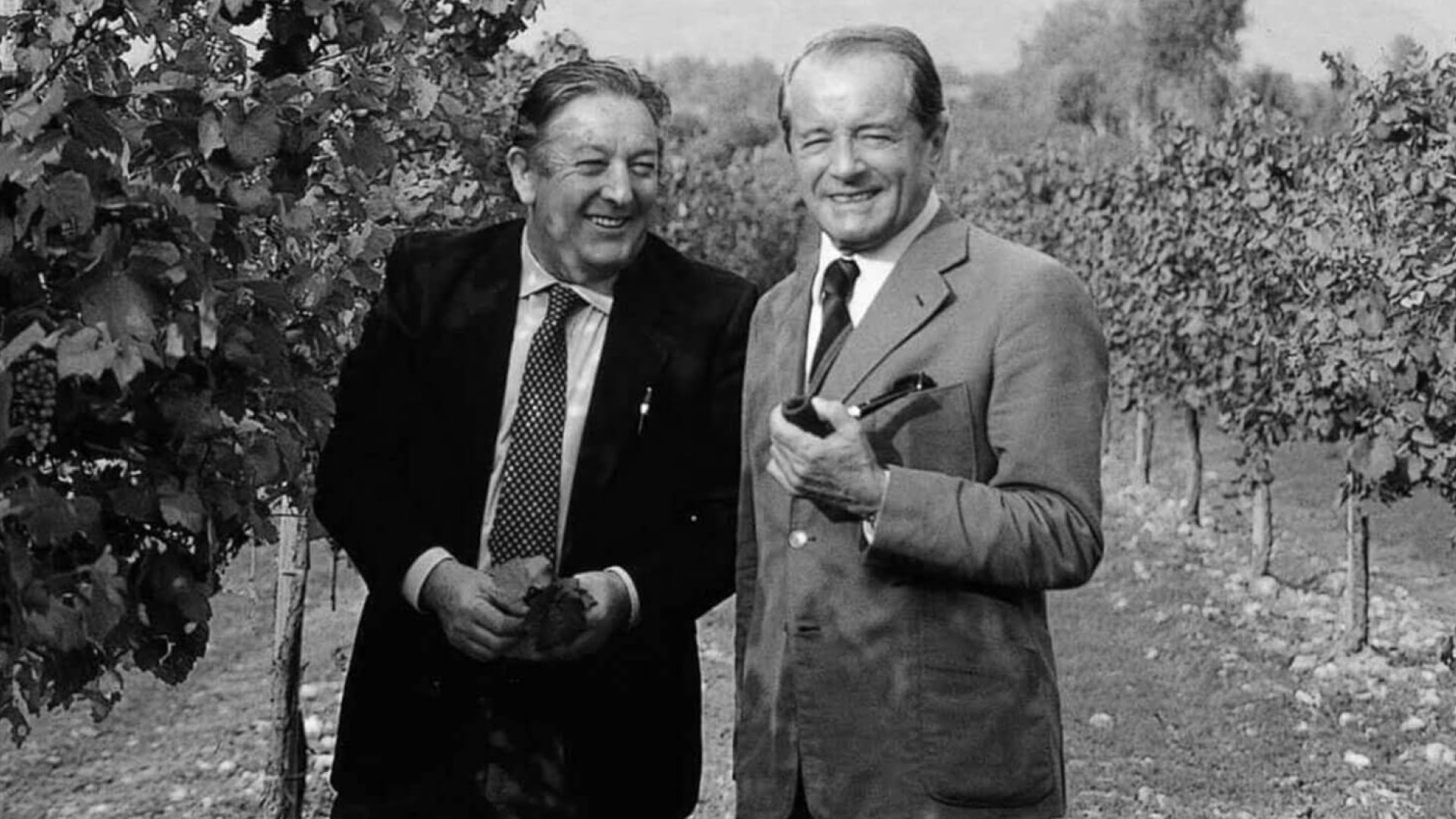
Franciacorta’s rise was unusually rapid. DOC status arrived in 1967; DOCG followed in 1995. From the beginning, the consortium pursued strict quality positioning. Yields were controlled. Minimum lees-aging requirements exceeded many international standards, and machine harvesting was prohibited for DOCG wines.
The landscape itself contributes to the wines’ character. Glacial soils composed of gravel, sand, limestone, and mineral deposits provide excellent drainage and complexity. The nearby lake moderates temperature extremes, preserving acidity despite increasingly warm summers.
Franciacorta wines are typically based on Chardonnay and Pinot Nero, with smaller proportions of Pinot Bianco and, more recently, Erbamat, an indigenous variety revived partly as a response to climate change due to its naturally high acidity and late ripening profile.
At their best, Franciacorta wines possess a tactile precision distinct from Champagne. The mousse often feels softer, broader. Fruit expression tends toward yellow orchard fruit, citrus oil, fennel, almond skin, and subtle herbal inflections rather than the sharper chalk-mineral austerity associated with northern Champagne. Extended lees aging introduces autolytic notes of bread crust, hazelnut, and pastry cream, though many examples frequently retain a sunnier fruit profile.
Ca’ del Bosco became one of the region’s emblematic houses under Maurizio Zanella, whose obsessive approach to viticulture and cellar hygiene helped elevate Franciacorta’s international reputation. Bellavista pursued elegance and age-worthiness through meticulous parcel selection and reserve wines. Smaller estates such as Barone Pizzini emphasized organic viticulture long before sustainability became fashionable marketing language.

Yet Franciacorta remains caught between aspiration and identity anxiety. Comparisons with Champagne are inevitable, sometimes useful, often limiting. The region’s most compelling wines increasingly succeed when they cease trying to emulate France and instead embrace their own Lombard texture, fruit profile, and gastronomic adaptability.
Trentodoc and the Alpine Idea
Northward, the sparkling wines of Trentino articulate another Italian interpretation of Metodo Classico: one shaped less by luxury mimicry than by altitude and mountain culture.
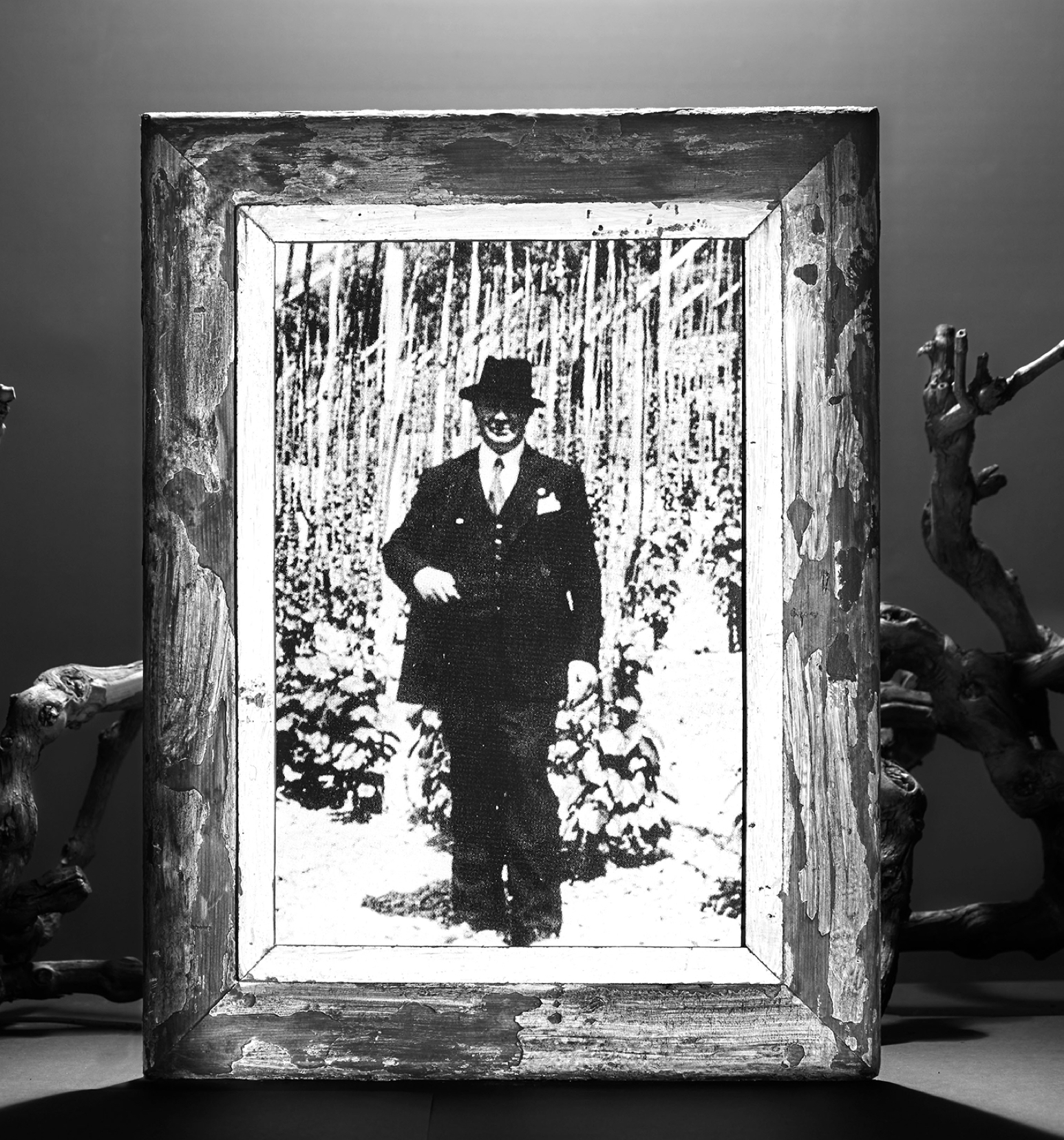
The origins of Trentodoc are inseparable from Giulio Ferrari, who studied winemaking in Montpellier at the end of the nineteenth century and recognized that Trentino’s Alpine climate resembled certain cooler zones of Champagne. Ferrari introduced Chardonnay to the region and began producing bottle-fermented wines of remarkable longevity and precision. Today, “Trentodoc” refers collectively to the denomination rather than exclusively to the Ferrari house, though Ferrari remains its dominant symbolic presence.
The geography is dramatic. Vineyards ascend Alpine valleys beneath the Dolomites, often between 200 and 800 meters above sea level. Diurnal temperature variation preserves acidity while prolonged sunlight exposure promotes phenolic ripeness. The resulting wines frequently combine tension with aromatic generosity.
Compared with Franciacorta, Trentodoc wines tend toward sharper linearity and mineral austerity. Chardonnay dominates, though Pinot Nero plays an important role in rosé and structured cuvées. Long lees aging is common. The best examples display remarkable longevity, evolving toward notes of mountain herbs, citrus pith, smoke, and alpine flowers.
Ferrari’s prestige cuvées have demonstrated the region’s aging capacity, particularly the Giulio Ferrari Riserva del Fondatore. Yet some of the most interesting contemporary work comes from smaller producers such as Revì, Letrari, and Altemasi, who emphasize mountain specificity rather than generic prestige cues.
Trentino’s cooperative culture also shapes the region profoundly. Unlike Champagne’s historically aristocratic and mercantile structures, many Alpine wine economies evolved through cooperative systems that protected small growers in difficult terrain. This contributes to a different social ethos around wine production, less hierarchical, more communitarian.
The wines themselves reflect mountain gastronomy. Trentodoc pairs naturally with smoked trout, speck, mountain cheeses, and herb-driven Alpine cuisine because its acidity cuts richness while its mineral profile resonates with the landscape’s savory textures.
There is also a psychological dimension to Alpine sparkling wine increasingly relevant in an era of warming climates. As temperatures rise across Europe, altitude has become not merely picturesque but economically strategic.
Prosecco: From Local Wine to Global Category
Few wines have undergone a transformation as radical as Prosecco. Until relatively recently, Prosecco referred both to a grape and to a localized wine tradition centered around the hills between Conegliano and Valdobbiadene in Veneto. Historically, these were difficult agricultural zones where mixed farming predominated and sparkling production varied from lightly frizzante to fully spumante styles.
The twentieth century changed everything. The expansion of tank fermentation technology after World War II enabled enormous scalability. Prosecco’s aromatic freshness, moderate alcohol, and approachable texture aligned perfectly with changing international drinking habits. It lacked the intimidating ritualism of Champagne. It could be consumed casually, during aperitivo, brunch, or weekday gatherings. It entered global markets at precisely the moment consumers sought accessible luxury.
The key grape, Glera, is central to this identity. Unlike Chardonnay or Pinot Noir, which derive much of their complexity through autolytic aging and structural development, Glera expresses itself through primary aromatics: white flowers, pear skin, green apple, acacia blossom, citrus peel, occasionally fennel or wet stone. Its appeal lies in delicacy rather than power.
The tank method preserves these volatile aromatic compounds exceptionally well. Secondary fermentation under pressure lasts weeks rather than years. Lees contact remains relatively brief. The resulting wines emphasize freshness, immediacy, and supple mousse.
Conegliano-Valdobbiadene: The Historic Hills
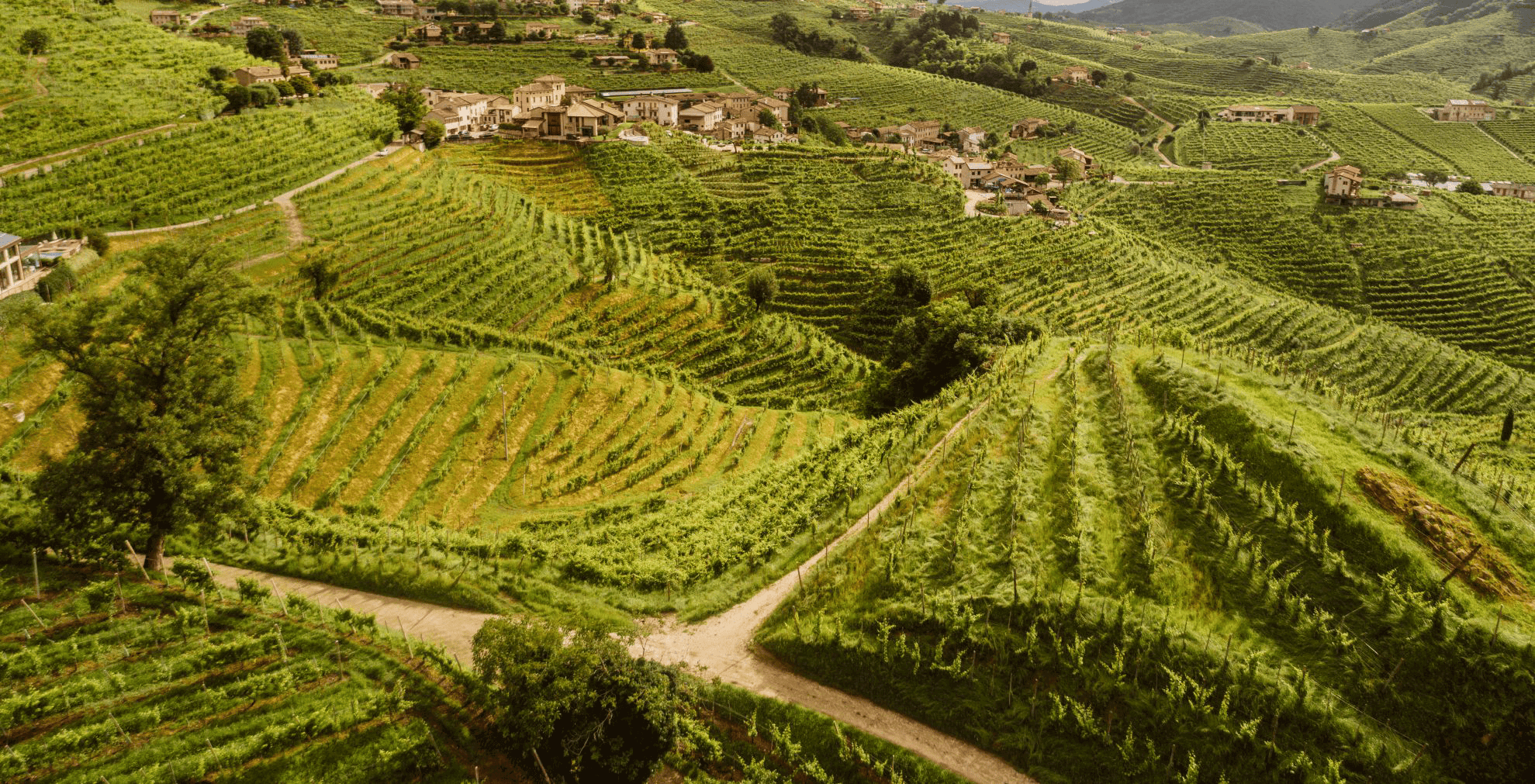
The steep UNESCO-listed hills between Conegliano and Valdobbiadene remain the symbolic and qualitative heart of Prosecco. Viticulture here is frequently heroic. Certain vineyards exceed gradients of 45 percent. Mechanization is difficult or impossible and hand harvesting remains essential in many top sites.
The area’s patchwork of microclimates and soils creates substantial diversity. Higher elevations preserve acidity. Clay-limestone soils contribute structure. South-facing amphitheaters achieve fuller ripeness. Fog from the Piave plain alternates with mountain breezes descending from the Alps.
Within the denomination, the cru-like category of Rive highlights wines from specific villages or steep sites. Cartizze, a small subzone near Valdobbiadene, has historically occupied prestige status due to its favorable exposures and complex soils.
At their finest, these wines transcend simplistic notions of Prosecco as merely easy drinking. Producers such as Nino Franco, Bisol, Adami, Andreola, and Bele Casel demonstrate that serious site expression is possible within the Martinotti method. The best examples possess layered texture, saline persistence, subtle phenolic grip, and remarkable gastronomic versatility.
There is also an ongoing revival of traditional “col fondo” styles, a bottle-refermented Prosecco that is left un-disgorged, often cloudy with lees sediment. These wines reconnect contemporary production to older peasant traditions predating industrial clarification and standardization. Dry, savory, slightly oxidative, and texturally complex, col fondo wines appeal increasingly to sommeliers and natural wine circles seeking authenticity beyond export-friendly polish.
Asolo: The Quiet Counterpoint
Asolo Prosecco Superiore occupies a smaller, less internationally dominant zone southwest of Conegliano-Valdobbiadene. The wines often display greater structural firmness and less overt fruitiness than mainstream Prosecco DOC bottlings.
The area’s rolling hills and more restrained production volumes have fostered a quieter identity. Producers frequently emphasize dryness, minerality, and terroir specificity over mass-market accessibility. Increasingly, Asolo serves as a refuge for drinkers and producers seeking an alternative to Prosecco’s industrial image.
Prosecco DOC and the Machinery of Scale
The expansion of Prosecco DOC across vast areas of Veneto and Friuli transformed the wine into a global commodity. Production volumes exploded. Export markets, particularly the United Kingdom and United States, drove demand.
Economically, the phenomenon is extraordinary. Prosecco became one of the world’s most successful wine exports not by competing directly with Champagne’s prestige model, but by redefining sparkling wine consumption entirely. It normalized everyday sparkling wine drinking.
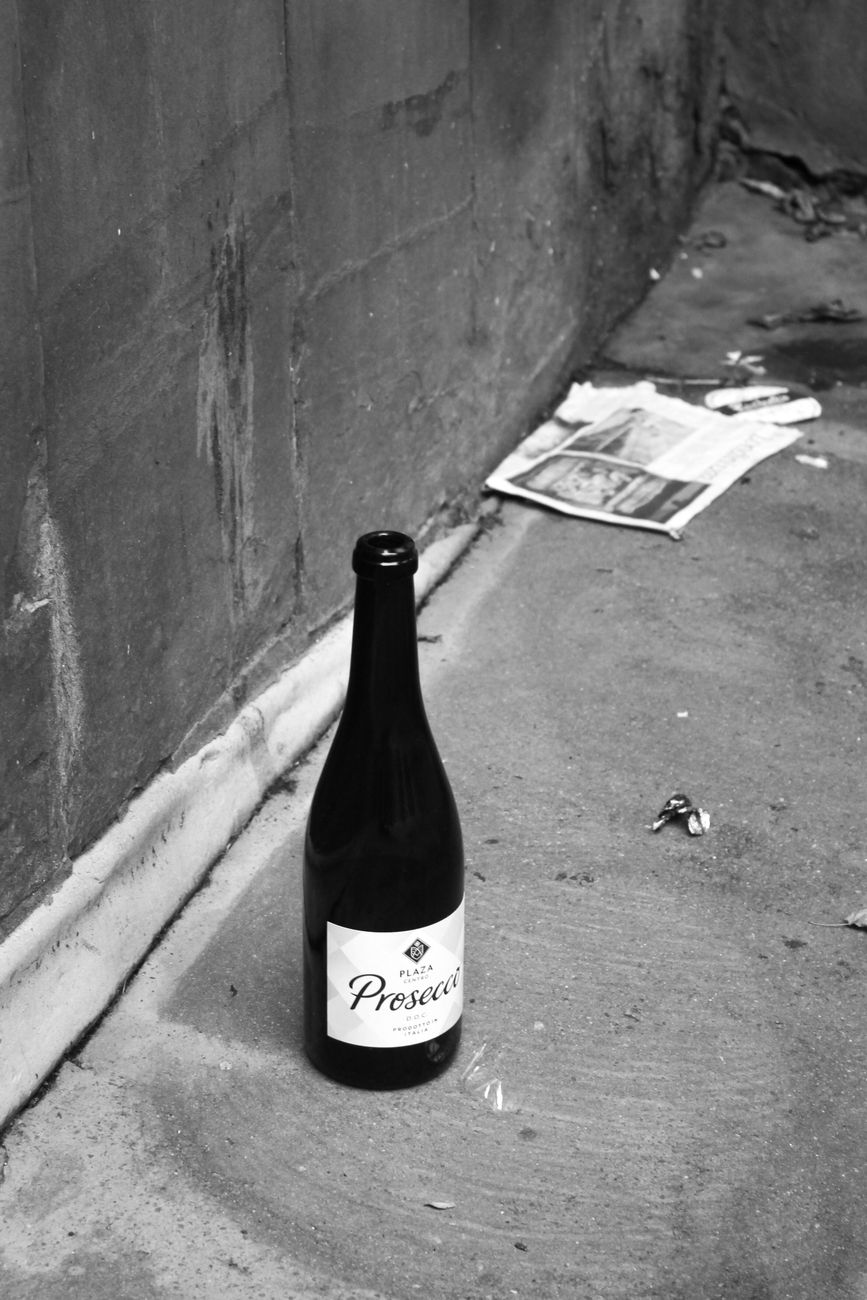
Yet success introduced profound tensions. Land prices in prestigious hillside zones soared. Monoculture expanded aggressively. Tourism intensified. Labor shortages emerged. Pesticide use became politically contentious, especially near populated villages and schools. Critics argued that the industrial logic of global demand threatened both ecological balance and cultural integrity.
Some growers increasingly resent the flattening effect of the “Prosecco” brand, which obscures distinctions between artisanal hillside wines and large-scale industrial production from plains vineyards.
Oltrepò Pavese and Alta Langa: The Quiet Contenders
If Franciacorta and Trentodoc represent established prestige, Oltrepò Pavese and Alta Langa embody quieter ambitions.
Oltrepò Pavese, south of Milan in Lombardy, possesses one of Italy’s highest concentrations of Pinot Nero. Historically underappreciated and commercially fragmented, the region has long supplied fruit to larger sparkling producers. Yet its calcareous soils and moderate climate allow for compelling Metodo Classico wines, particularly rosé styles emphasizing Pinot Nero structure and red-fruit complexity.
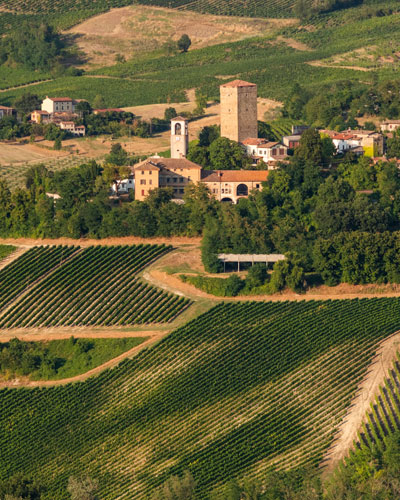
The region suffers partly from identity inconsistency. Cooperative structures, bulk production, and uneven quality have complicated prestige positioning. Nonetheless, producers such as Monsupello and Bruno Verdi continue demonstrating substantial potential.
Alta Langa in Piedmont offers perhaps the most intellectually intriguing development among Italian sparkling regions. High-altitude vineyards planted with Pinot Nero and Chardonnay produce rigorously bottle-fermented wines with extended lees aging requirements. The climate is cool, the soils calcareous, the growing season relatively long.
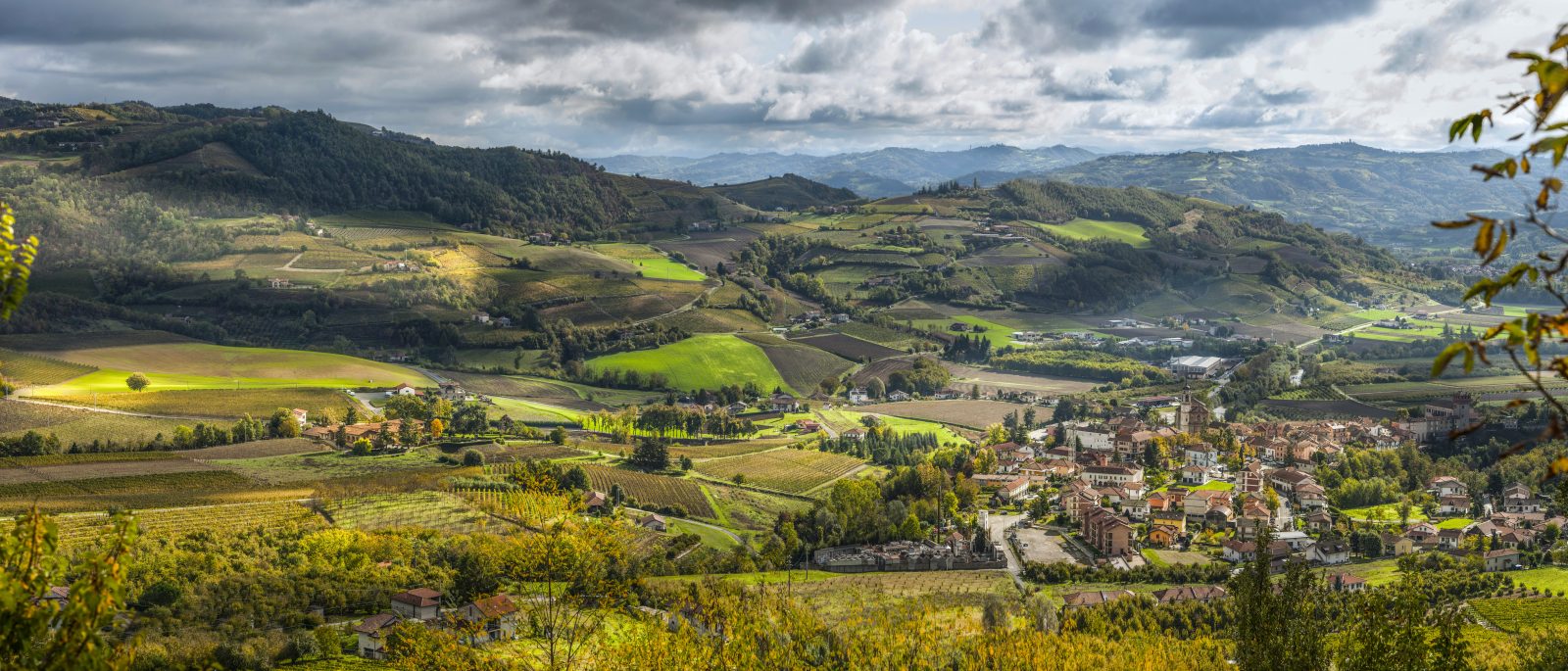
Unlike Franciacorta, Alta Langa has embraced a more restrained, almost severe stylistic identity. Dosage levels are frequently low. Wines emphasize tension, verticality, and gastronomic seriousness. There is less overt pursuit of opulence.
Piedmont’s deep gastronomic culture shapes this approach. These are wines intended not merely for aperitivo but for extended meals involving hazelnuts, tajarin, white truffles, raw Fassona beef, and aged cheeses.
Lambrusco: The Rehabilitation of a Misunderstood Wine
No Italian sparkling wine suffered more from industrial overproduction and international misunderstanding than Lambrusco.
In the 1970s and 1980s, sweet industrial Lambrusco flooded export markets, particularly in the United States, where it became associated with inexpensive semi-sweet red fizz consumed from ice buckets in suburban Italian-American restaurants. The reputation proved difficult to escape.
Yet the finest Lambrusco has little relation to that caricature.
Emilia-Romagna’s Lambrusco zones, including Sorbara, Grasparossa, Salamino, and Reggiano, preserve one of Europe’s most distinctive sparkling traditions. Produced from multiple Lambrusco varieties, these wines range from pale, floral, high-acid styles to darker, more structured examples with tannic grip.
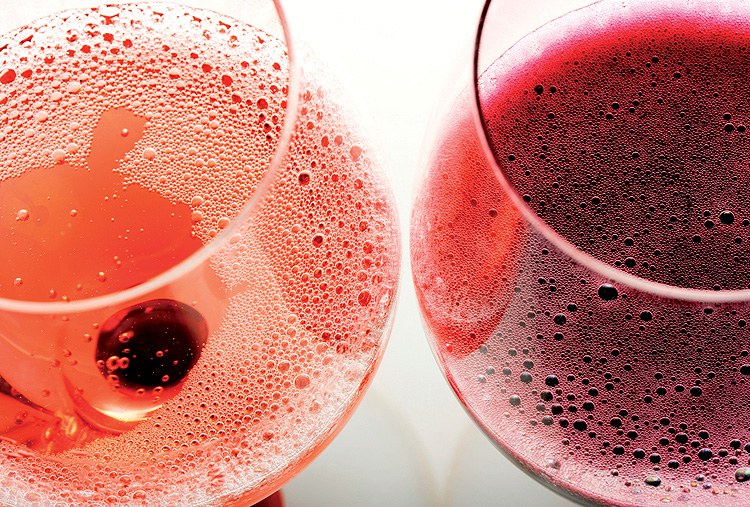
Lambrusco di Sorbara, often pale ruby with pink foam, can possess astonishing finesse: violet, blood orange, rhubarb, pomegranate, and saline acidity. Whereas Lambrusco Grasparossa tends toward darker fruit, tannin, and earthy richness.
Crucially, Lambrusco is among the world’s greatest food wines. Its acidity, bitterness, tannin, and effervescence make it uniquely suited to Emilia’s rich cuisine: Parmigiano Reggiano, mortadella, bollito misto, cotechino, lasagne, and fried gnocco fritto. Sparkling structure functions to cleanse fat while tannins interact with protein, enhancing both wine and food.
Artisanal producers such as Cleto Chiarli, Paltrinieri, and Vittorio Graziano helped rehabilitate Lambrusco’s image by emphasizing dry styles, indigenous viticulture, and traditional methods. Some employ ancestral fermentation techniques producing lightly cloudy wines with rustic complexity.
Lambrusco’s revival also reflects broader sociological changes in wine culture. Sommeliers increasingly value drinkability, moderate alcohol, and regional authenticity over sheer prestige. In that context, Lambrusco suddenly appears not backward but prescient.
Asti and Moscato d’Asti: Sweetness, Aroma, and Misjudgment
Sweet sparkling wines occupy an uneasy position in contemporary fine wine discourse, often dismissed as unserious despite enormous technical difficulty and historical significance.
Asti and Moscato d’Asti remain among Italy’s most culturally important sparkling wines. Produced from Moscato Bianco in Piedmont, these wines rely on arrested fermentation techniques preserving natural grape sugars alongside vivid aromatics. Moscato contains high concentrations of terpenes, aromatic compounds responsible for intense floral and grapey aromas. When carefully managed, these compounds produce wines of remarkable perfume without descending into vulgarity.
Moscato d’Asti, lightly sparkling and relatively low in alcohol, can achieve extraordinary delicacy: orange blossom, sage, peach skin, bergamot, fresh grape must. Its sweetness is balanced by acidity and low alcohol, creating an almost weightless impression.
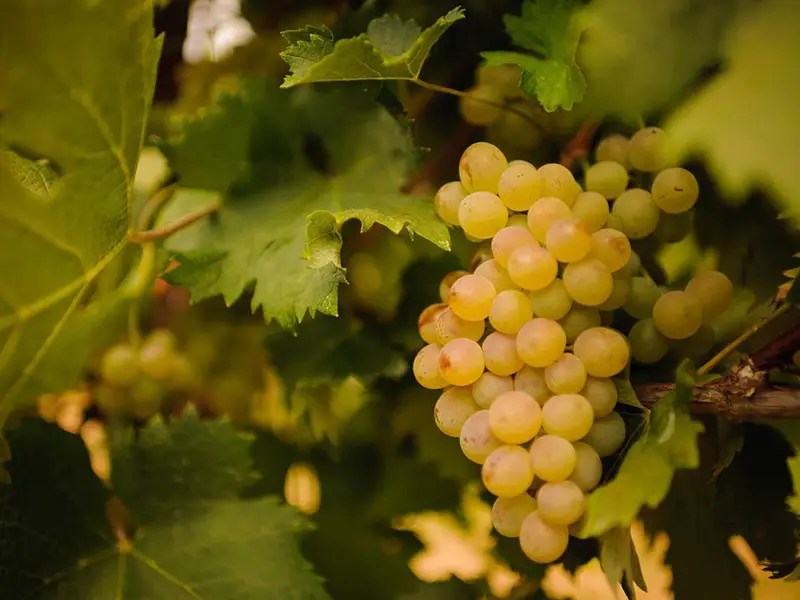
The wines possess deep cultural resonance in Italy, particularly in festive and family contexts. They accompany pastries, panettone, fruit desserts, and certain cheeses. Yet they also pair unexpectedly well with spicy cuisines because residual sugar moderates capsaicin heat.
The challenge for Asti historically has been image. Mass-market industrial bottlings damaged perceptions much as they did with Lambrusco. Nonetheless, producers such as Ceretto, La Spinetta, and Vietti continue demonstrating the category’s sophistication.
Understanding the Methods: Time, Pressure, and Yeast
Sparkling wine production is fundamentally about controlling fermentation, pressure, and time.
In Metodo Classico, the traditional bottle-fermented system, a base wine undergoes secondary fermentation inside the bottle after addition of sugar and yeast (liqueur de tirage). Carbon dioxide produced during fermentation becomes trapped under pressure, dissolving into the wine.
The wine then ages on spent yeast cells known as lees. Over time, autolysis occurs: yeast cells break down, releasing mannoproteins and amino acids that contribute texture, stability, and complex aromas associated with brioche, bread crust, nuts, and pastry.
Riddling gradually moves sediment toward the bottle neck. Disgorgement removes the lees plug. The dosage, a final addition of wine and sugar, adjusts balance and style.
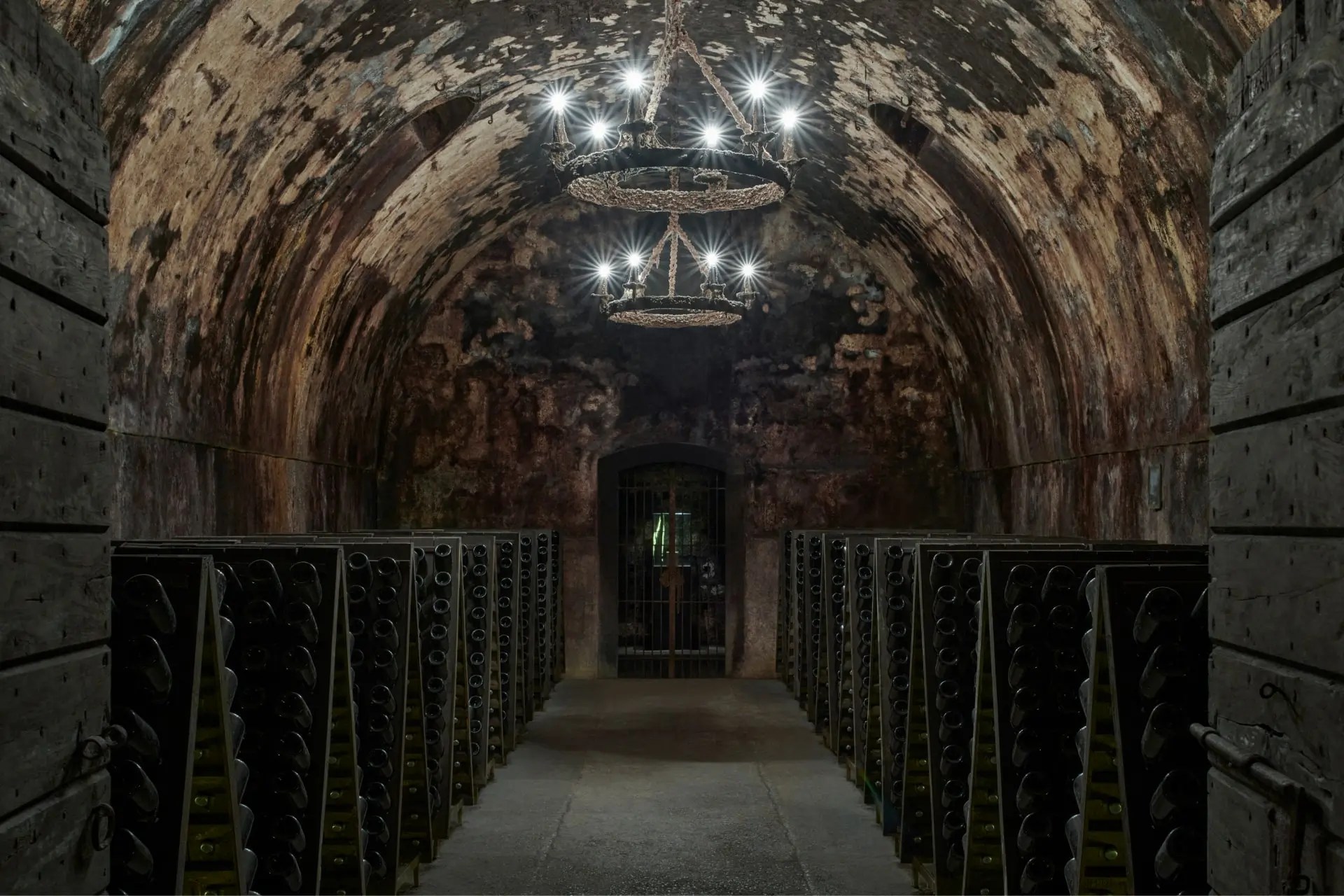
Lees aging duration profoundly affects style. Young wines emphasize fruit and freshness. Extended aging introduces complexity, creamier mousse, and savory depth.
Metodo Martinotti differs structurally. Secondary fermentation occurs in pressurized tanks rather than individual bottles. Lees contact is generally shorter. The resulting wines emphasize varietal purity and freshness rather than autolytic complexity.
Neither method is inherently superior. Their suitability depends upon grape variety, climate, and intended style.
Ancestral method, which is increasingly fashionable among natural wine producers, involve bottling partially fermented wine before primary fermentation concludes. Fermentation continues in bottle without disgorgement. These wines can be cloudy, unpredictable, and texturally distinctive.
The current revival of ancestral sparkling wines partly reflects resistance against industrial standardization. Consumers increasingly seek wines displaying irregularity, locality, and visible human intervention.
Grapes, Texture, and the Language of Italian Sparkling Wine
Italian sparkling wine’s diversity derives largely from its grape material.
Glera produces moderate acidity, delicate aromatics, and supple texture. Its strength lies not in concentration but in transparency and lift. Well-grown Glera can convey remarkable nuance through subtle floral and mineral variations.
Chardonnay provides structure, acidity, and aging potential. In Franciacorta and Trentodoc it often contributes citrus tension, orchard fruit, and autolytic compatibility.
Pinot Nero adds phenolic backbone, red-fruit depth, and longevity. In warmer Italian conditions it can become broader and more generous than many Champagne equivalents.
Pinot Bianco contributes subtle floral elegance and structural finesse.
Lambrusco varieties offer acidity, tannin, bitterness, and dark-fruited aromatic complexity unusual in sparkling wine.
Moscato Bianco provides one of the world’s most expressive aromatic profiles, driven by terpene compounds generating floral and citrus intensity.
Increasingly, and interestingly, indigenous varieties are reentering sparkling production. Nerello Mascalese on Etna, Durella in Veneto, Verdicchio in Marche, and Nebbiolo in Alta Langa contexts all illustrate experimentation beyond international grapes.
Texture matters enormously in sparkling wine assessment. The mousse, the tactile sensation of bubbles, depends upon pressure, protein structure, lees aging, and production technique. Fine persistent mousse often signals careful secondary fermentation and aging.
Acidity provides architecture. Without sufficient acidity, sparkling wines become diffuse or cloying.
Minerality, though scientifically contested as a tasting term, remains useful phenomenologically. Certain Italian sparkling wines convey saline, stony, or chalk-like impressions strongly tied to site and acidity structure.
Aging potential varies dramatically. High-quality Metodo Classico wines can evolve for decades, developing tertiary aromas of mushroom, honey, tobacco, and toasted nuts. Tank-method wines generally prioritize youthful freshness, though serious examples can surprise.
Climate Change, Land Pressure, and the Future of Italian Sparkling Wine
Climate change now shapes every serious conversation about Italian sparkling wine.
Warmer vintages threaten acid retention, particularly in lower-altitude zones. Earlier harvests alter aromatic development. Extreme weather events, such as hail, drought, and spring frost, increase unpredictability. Though, some regions benefit temporarily. Alta Langa and high-altitude Trentodoc vineyards now achieve ripeness more consistently than decades ago. Yet long-term trajectories remain uncertain.
Producers have responded through canopy management, earlier harvesting, higher-altitude plantings, and revival of naturally acidic indigenous varieties such as Erbamat.
The economics are equally destabilizing. Land values in prestigious Prosecco zones have risen dramatically, attracting outside investors and increasing consolidation pressure. Younger generations often inherit vineyards worth millions while simultaneously confronting ecological criticism and labor scarcity.
Tourism adds another layer. UNESCO recognition brought prestige to Conegliano-Valdobbiadene but intensified visitor pressure. Some residents fear transformation into a wine-theme landscape optimized for external consumption rather than local continuity.
Labor conditions remain uneven. Steep-slope viticulture is physically punishing. Seasonal labor dependence raises ethical and economic questions increasingly visible across European agriculture.
Sustainability discourse in Italian sparkling wine can also become performative. Organic certification alone does not resolve monoculture vulnerability or tourism-driven ecological strain. Serious producers increasingly discuss biodiversity corridors, reduced chemical inputs, water management, and carbon footprint reduction with greater urgency.

